
When I first studied harmony, I was surprised that there weren’t standard courses or books that covered music that was between tonal and atonal. And even today, in academic studies of traditional harmony, you essentially have the diatonic/chromatic system and atonal set theory. But the gap between the two is where plenty of great film music draws from. Think of the opening chord to E.T., or the roof fight cue from the 1989 Batman film, or the strange music in Close Encounters of the Third Kind. I wanted to bring you a solid understanding of cool harmonic effects like these. So I created the Extended Tonal and Atonal Harmony course to focus on three main areas of harmony: non-diatonic scales, common extended tonal and atonal chords, and advanced atonal techniques.
Non-Diatonic Scales
I felt that some of film music’s most common non-diatonic scales – pentatonic, whole tone, and phrygian dominant – require a good amount of detail on how to get film-like harmonies from them, and what associations they usually have (because they are strongly associative!).
Take the whole tone scale, for example, which usually depicts a threatening feeling of mystery in film music.
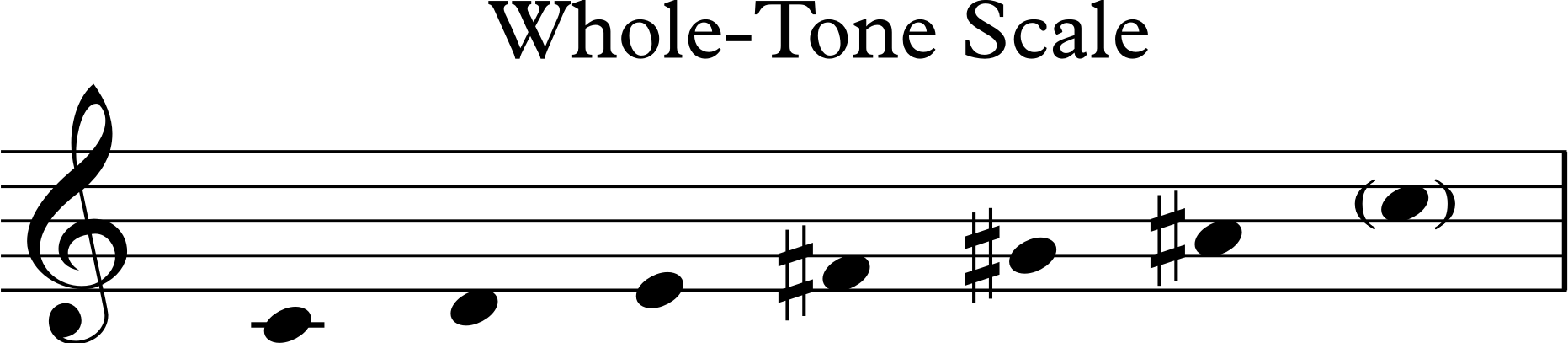
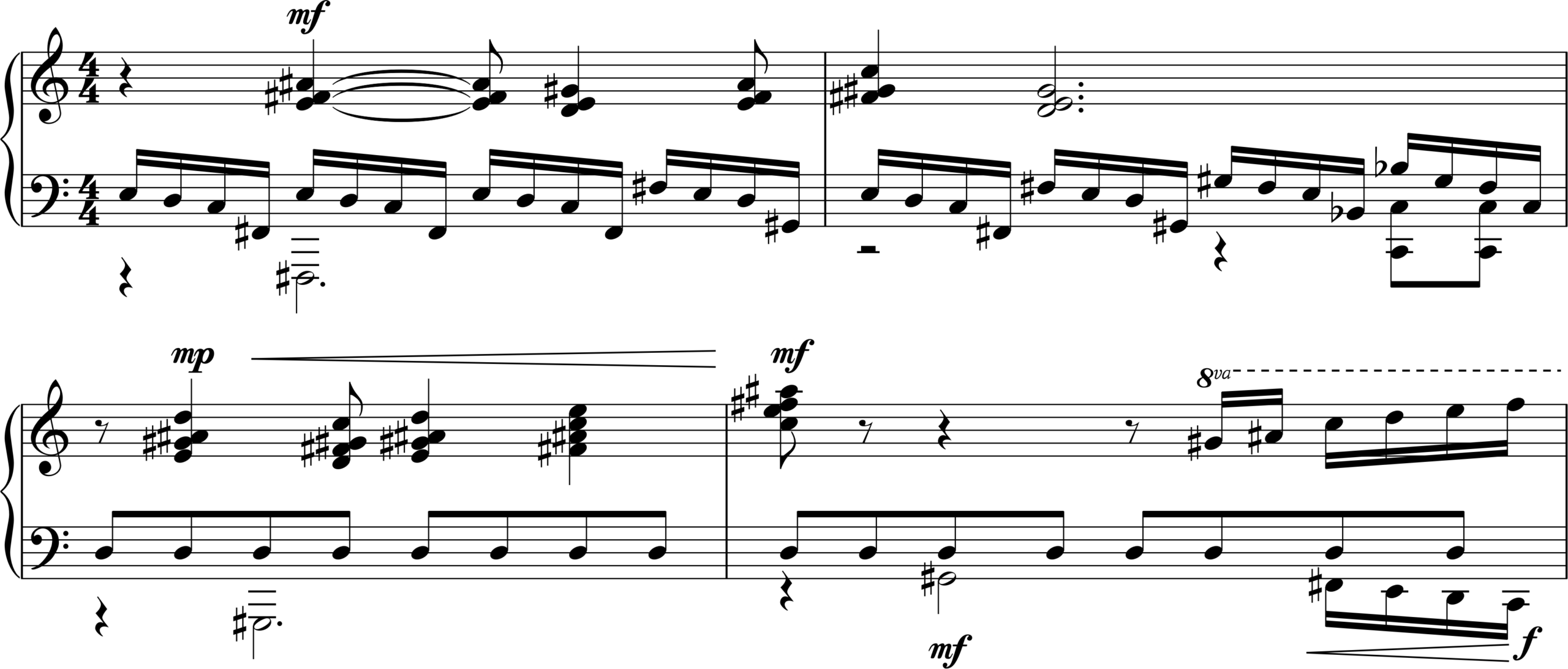
This scale can quickly become predictable sounding because every interval and chord can be built on every note of the scale. If the scale continues for some time, film composers tend to use several different harmonic materials in the same passage, like:
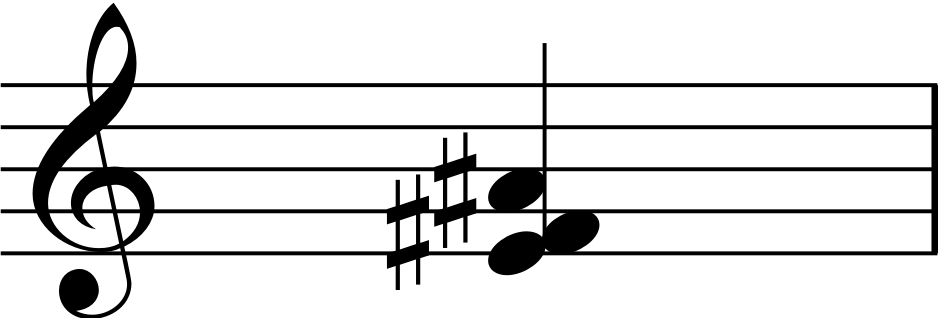
a solid triad
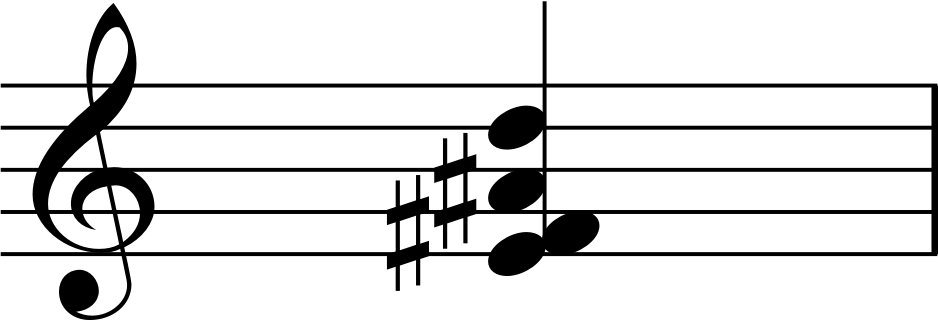
a solid tetrad
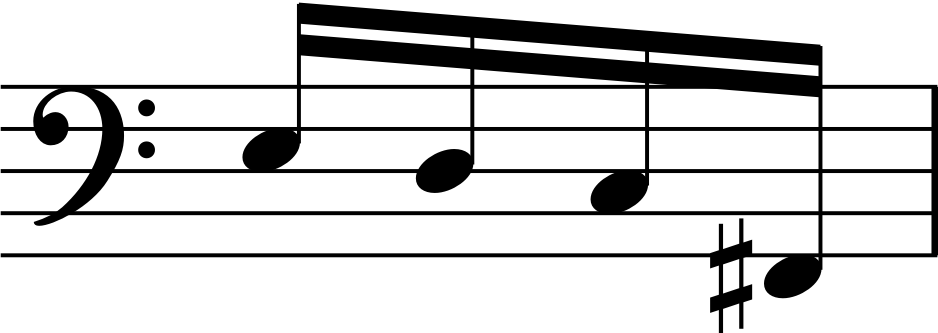
a broken tetrad
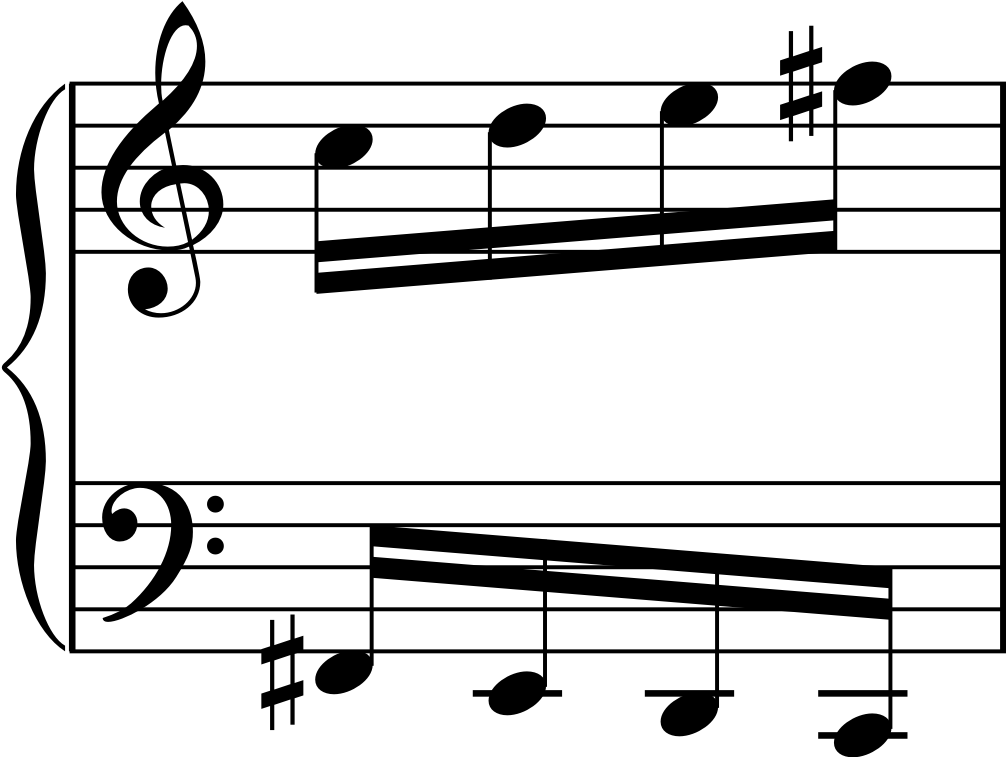
and the odd flourish.
This helps to keep things sounding fresh without having to change the scale. Here’s a passage I wrote that demonstrates the idea:
Extended Tonal and Atonal Chords
Another important idea is a collection of common film-music chords that are either extended tonal or atonal. One of the extended-tonal chords is what I call the dissonant-bass chord. All that means is a major or minor triad with a non-chord note against it in the bass.
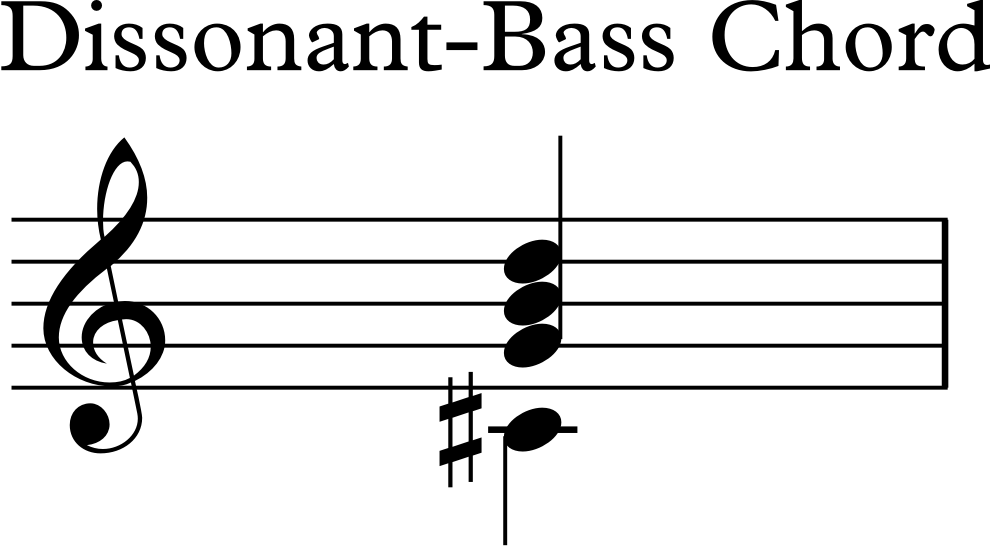
It’s not a resolving kind of dissonance, but one that is there to create a certain sound. The more dissonance between the bass and triad above it, the higher the tension in the scene tends to be. So imagine a scene where something heroic occurs in the midst of an ongoing battle – so a high-tension situation. Here’s an excerpt I wrote with dissonant-bass chords to convey the idea:

Advanced Atonal Techniques
We do, of course, get to set theory as well, and we talk about the most common atonal chords in film, what they tend to mean, and even how you can work them into a twelve-tone row to create longer stretches of atonal music. But we also talk about those more “avant-garde” techniques like writing with clusters, slow glissandos, quarter-tone wavering, and the like that can create some truly chilling sounds. Here’s a passage of mine that demonstrates these concepts:
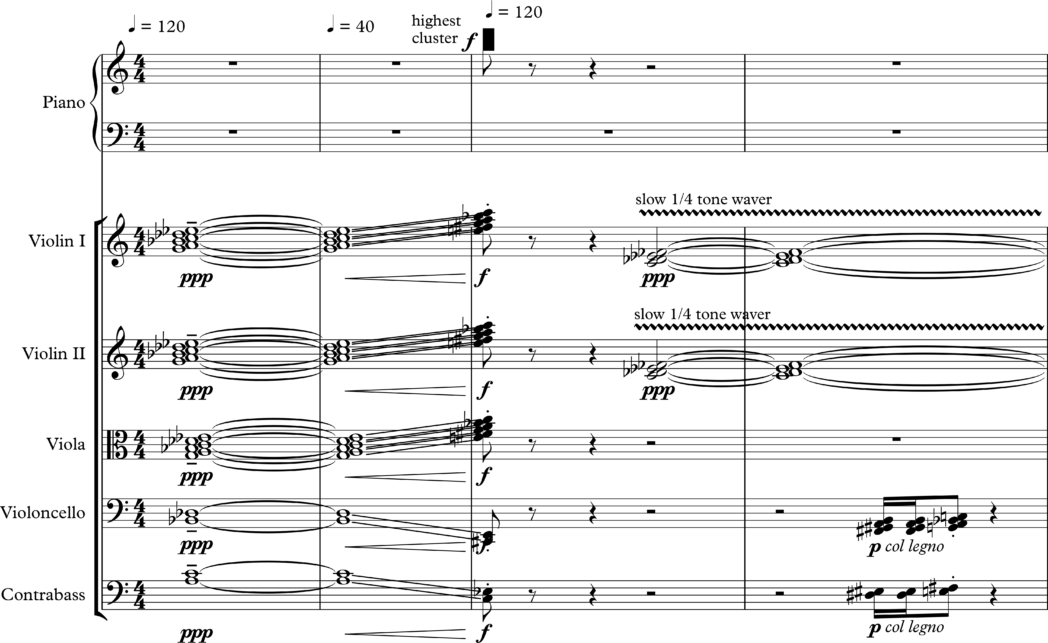
So in covering concepts like non-diatonic scales, common extended-tonal or atonal chords, and avant-garde techniques, I feel that this new course bridges that gap I always felt between tonal and atonal harmony studies, and gives those interested in music for media a solid grounding for knowing not just how and when to best apply these harmonies but, most importantly, what it is they usually mean.
Extended Tonal and Atonal Harmony in Film is at 20% off until the next course release, and all general harmony courses are in a bundle for 20% off (with Fundamentals for free). See here for details.
I promised myself I would resist this course for a couple of months as I have just finished Mark’s last course and wanted to allow all the knowledge to sink in.
But in the end I just couldn’t resist! I’ve made my way through lesson 1 and already it’s full of useful gems. Now onto the exercises and the rest of the course.
As always, the only thing that baffles me about Mark’s courses is why he is not already a world-famous film composer!!
He has an incredible depth of insight into every aspect of film music and his compositions are consistently both excellent and idiomatic to the lesson at hand.
Keep up the Awesomeness
(Kung-Fu Panda reference, see what I did there!!!)
Thanks so much, Steve! Looking forward to having you in the forums again and hearing what you cook up in the exercises. I’m sure it will be worthy of Master Oogway!